
Newsletter Subscribe
Enter your email address below and subscribe to our newsletter
Enter your email address below and subscribe to our newsletter

 Byadmin
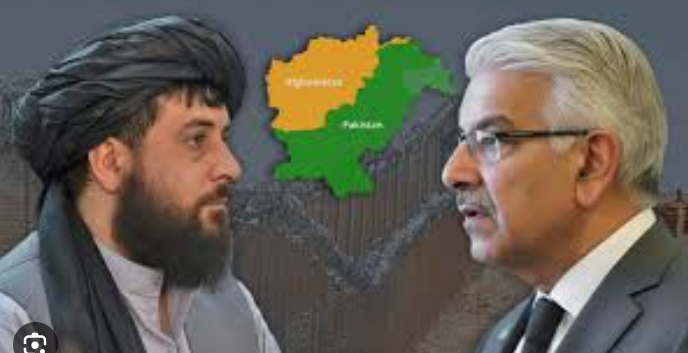
Efforts to stabilize relations between Afghanistan and Pakistan collapsed this week, casting new uncertainty over a fragile ceasefire along their 2,600-kilometer border.
Talks held in Istanbul, mediated by Turkey, ended without progress after Islamabad pressed Kabul to act against militant groups threatening Pakistan’s internal security. The Taliban rejected the demand as “beyond our capacity,” according to spokesman Zabihullah Mujahid.
Despite the diplomatic failure, both sides confirmed the ceasefire signed in Doha last month remains in effect — a reflection not only of military caution but also of economic necessity.
The border corridor linking Spin Boldak in Afghanistan and Chaman in Pakistan serves as a key trade artery for regional goods and fuel shipments. Disruption risks deepening both countries’ fragile economies. Afghanistan’s customs revenues depend heavily on border trade, while Pakistan faces inflation and declining foreign reserves amid regional instability.
“Neither side can afford a prolonged conflict,” said a South Asian security analyst based in Islamabad. “Trade across the frontier sustains local economies — and it’s one of the few remaining lifelines for Afghanistan’s budget.”
Turkey’s involvement highlights the growing role of Ankara’s economic diplomacy in South Asia. President Erdoğan met Pakistani Prime Minister Shehbaz Sharif in Baku, reaffirming Turkey’s intention to “contribute to lasting stability” and regional commerce.
The breakdown follows weeks of escalating tension. In October, Pakistani airstrikes targeted sites in Kabul and Khost, killing several members of the Tehrik-i-Taliban Pakistan (TTP), a militant group accused of cross-border attacks. The Taliban responded by reinforcing frontier outposts.
Since taking power in 2021, the Taliban have sought to open trade routes with neighbors to offset international sanctions and aid cuts. Pakistan remains one of its largest trading partners, despite mutual accusations of harboring militants.
Economists warn that renewed hostilities could jeopardize regional infrastructure initiatives — including China’s Belt and Road-linked CPEC projects extending through western Pakistan. “Instability on the Afghan border directly impacts logistics and investor confidence,” said the analyst.
For now, both capitals are publicly committed to restraint. But without a political mechanism to manage future flare-ups, economic pressure alone may not keep the peace.