
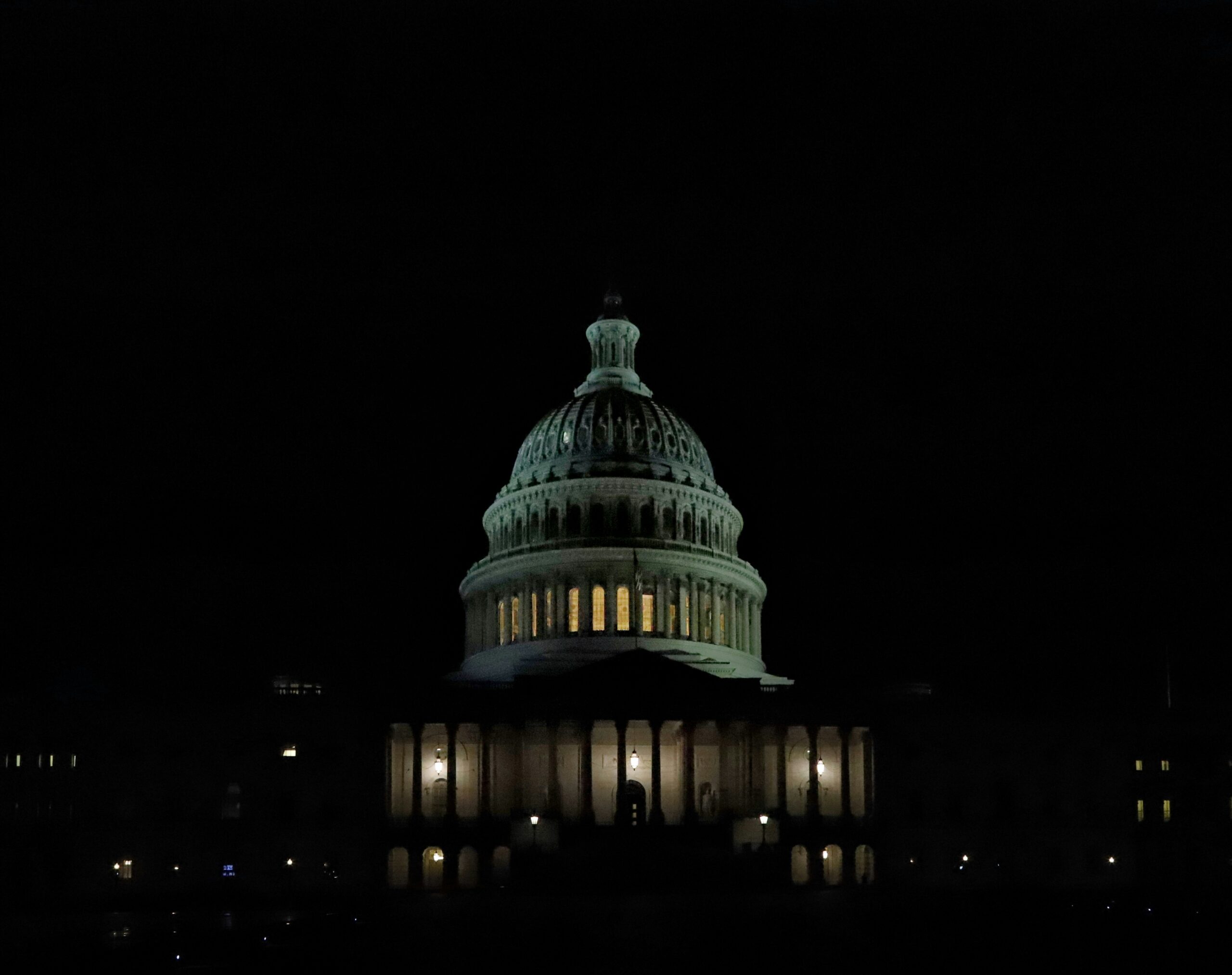

The U.S. House of Representatives is preparing to vote on a bill that would end the longest government shutdown in American history, a 43-day standoff that has rippled through federal agencies, disrupted air travel, and strained millions of households.
With a narrow 219–213 Republican majority, the House is expected to approve the stopgap funding package late Wednesday. Backed by President Donald Trump and passed earlier this week by the Senate, the measure would reopen shuttered departments and restart payments to federal employees, air-traffic controllers, and food-assistance programs.
The shutdown, triggered by partisan deadlock over healthcare subsidies, has cost the economy billions in lost productivity. Yet the deal to reopen government arrives with new controversy — including a clause that could grant up to $500,000 in damages to eight Republican senators whose phone records were subpoenaed during the Justice Department’s 2021 investigation into the January 6 Capitol riot.
A Costly Standoff Nears Its End
House Speaker Mike Johnson, who kept the chamber in recess for nearly two months as leverage during negotiations, called the deal “a victory for fiscal restraint.” Critics countered that the shutdown’s economic toll far outweighed any budgetary gains.
The bill would extend federal funding through January 30, temporarily stabilizing operations while leaving the broader budget unresolved. The measure adds an estimated $1.8 trillion in annual spending to the federal debt, now surpassing $38 trillion — a figure economists say will complicate future fiscal policy.
Democrats have opposed the deal, citing the exclusion of health insurance subsidies they had sought to renew. House Democratic leader Hakeem Jeffries accused Republicans of “turning the affordability crisis into a political game,” while eight Senate Democrats broke ranks to pass the package on Monday.
Despite divisions, markets appeared relieved. Treasury yields eased slightly Wednesday morning, and airline shares rose on expectations that federal operations — including the FAA — would soon normalize.
Inside the Political Exchange
The funding bill carries several side provisions that have intensified debate. Beyond the privacy-damages clause, the legislation includes three full-year appropriations bills for military construction, agriculture, and legislative operations— designed to provide short-term stability while deeper budget talks continue.
The privacy measure has drawn sharp backlash from Democratic senators, who called it a “corrupt cash bonus.” Senator Patty Murray criticized the addition as “a betrayal of public trust,” noting its timing alongside the removal of healthcare subsidies and food-aid extensions.
Republicans defended the clause as a privacy protection reform, arguing that the Justice Department’s earlier subpoenas represented government overreach.
Economic Stakes Beyond the Vote
Economists warn that the 43-day shutdown will leave lasting scars. Roughly 800,000 federal workers went without pay, while key services — from housing aid to food inspection — were delayed. The Federal Aviation Administration’spartial closure strained air travel networks and logistics chains, contributing to holiday-season uncertainty.
Financial analysts estimate the total cost to the economy could exceed $10 billion, factoring in lost output and delayed spending. “It’s a short-term reopening, not a resolution,” said one Washington-based policy strategist. “The fundamental fiscal disagreements remain exactly where they were.”
Still, the end of the shutdown is expected to restore confidence in U.S. governance — at least temporarily. For investors, the focus now shifts to whether Washington can produce a sustainable funding framework before the next deadline in early 2026.
As Congress prepares to cast its votes, the image of a Capitol shrouded in autumn leaves has become a symbol of endurance — a reminder that even in a government built on deadlines, stability remains the rarest currency of all.


